About the Journal
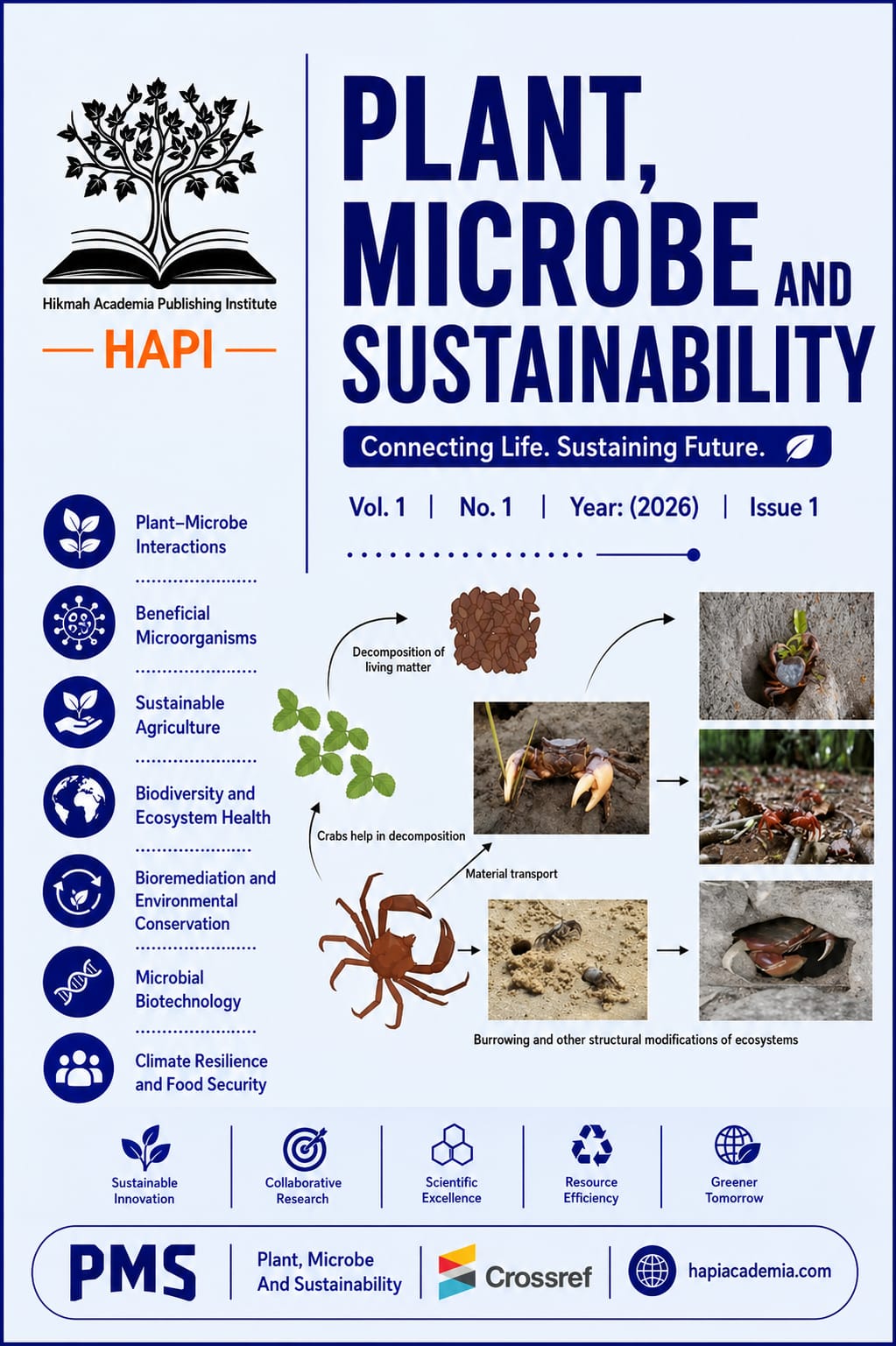
Plant, Microbe and Sustainability is a peer-reviewed international journal dedicated to publishing high-quality research on the interactions between plants and microbes, and their role in promoting sustainable agriculture, environmental management, and ecosystem health. The journal provides a platform for scientists, researchers, and practitioners to share innovative studies that explore plant-microbe interactions, soil microbiology, and sustainable biotechnological applications.
The journal covers a wide range of topics, including plant growth-promoting microbes, microbial ecology, biocontrol agents, rhizosphere biology, nutrient cycling, soil health, and sustainable crop management practices. Emphasis is placed on integrative approaches that enhance crop productivity, environmental sustainability, and resilience against biotic and abiotic stresses.
Plant, Microbe and Sustainability is committed to rigorous peer review, ethical publishing standards, and global dissemination of research that advances knowledge in plant-microbe interactions and sustainable agriculture.
The journal emphasizes interdisciplinary research integrating plant science, microbiology, biotechnology, and environmental science to address global challenges such as food security, climate change, and sustainable resource management.
Scope of the Journal Includes (but is not limited to):
-
Plant growth-promoting microbes and symbiotic relationships
-
Rhizosphere biology and microbial ecology
-
Biocontrol agents and disease management
-
Soil health, nutrient cycling, and fertility management
-
Sustainable crop production and agroecosystem management
-
Microbial biotechnology for agriculture and environment
-
Stress physiology and microbial mitigation of abiotic stresses
-
Microbiome studies and metagenomics
-
Environmental sustainability and ecosystem restoration
-
Integrated plant-microbe approaches for productivity and resilience
The journal publishes original research articles, review papers, short communications, and technical notes that demonstrate scientific rigor, innovation, and relevance to sustainable agriculture and environmental stewardship.
Plant, Microbe and Sustainability is committed to ethical publishing, rigorous peer review, and global dissemination of research that contributes to sustainable agricultural practices and ecosystem management.
Current Issue
Vol. 1 No. 1 (2026)
Published:
2026-10-08
Articles